
Embryo Freezing & Cryopreservation in Delhi
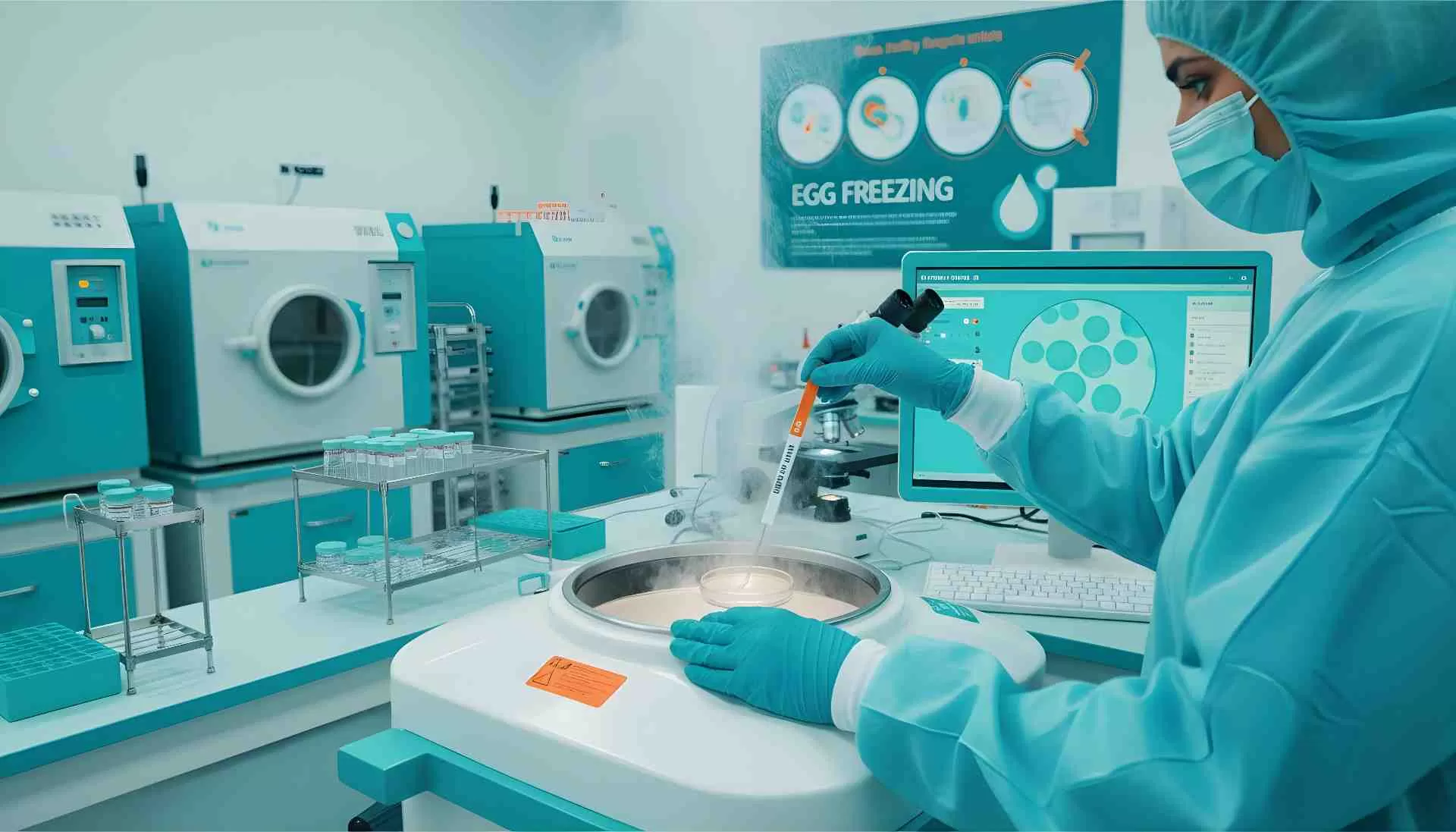
After an IVF cycle, it's common to have more good-quality embryos than are transferred in a single attempt. Embryo freezing, or cryopreservation, lets you store those remaining embryos for a future frozen embryo transfer rather than discarding them.
How Embryos Are Frozen
The technique used is vitrification, a rapid-freezing method that largely replaced slow-freezing in IVF labs because it reduces ice crystal formation, which can damage embryo cells. Embryos are typically frozen at the blastocyst stage, around day five or six of development.
Why Patients Choose This
- Preserving surplus embryos from an IVF cycle for a future attempt, without repeating stimulation and egg retrieval
- Allowing time for genetic testing results to come back before deciding which embryo to transfer
- Medical reasons to delay a fresh transfer, such as OHSS risk or an unfavourable uterine lining that cycle
Embryo Freezing vs. Egg Freezing
These are different procedures. Egg freezing stores unfertilized eggs, usually before a partner or donor sperm is involved. Embryo freezing stores eggs that have already been fertilized and developed into embryos, which generally requires having decided on a sperm source first.
FAQ (Frequently Asked Questions):
Helpful Resources

Medically Reviewed by
Dr. Nidhi Sharma, MBBS, DGO, DNB
Dr. Nidhi Sharma is a fertility specialist with an MBBS, a DGO in Obstetrics & Gynaecology, and a DNB, bringing over 20 years of experience in reproductive medicine. She leads the IVF, ICSI, and fertility preservation programmes at Crystal Fertility & IVF Center in Dwarka, New Delhi.