What Is IVF? Complete Meaning & Explanation
Many couples think that having a child is only possible in their dreams. But if getting pregnant naturally is hard, IVF (In Vitro Fertilization) is a medical miracle that gives people hope. When it comes to fertility treatments, IVF is one of the most advanced in the world. It has helped millions of couples become parents.
We'll talk about what IVF is, why it's done, who needs it, and the most important things you should know before you start the process.
IVF Full Form and Definition
IVF stands for In Vitro Fertilization.
Latin roots give us the phrase "in vitro," which means "in glass." This term originates from the fact that fertilization occurs outside the body, in a test tube or laboratory dish, where conditions are carefully controlled.
In simple words, IVF is a medical process in which eggs from a woman and sperm from a man (or a donor) are mixed in a lab to make embryos. These embryos are then placed back into the woman's uterus to facilitate pregnancy.
IVF is thought to be one of the best ways to get pregnant around the world. It is suggested for couples who are having trouble getting pregnant normally for medical, genetic, or unknown reasons. Millions of healthy babies have been born through IVF since the first baby was born through the procedure in 1978. This makes IVF a reliable and scientifically proven method.
For many couples, IVF is not just a medical term but it is a long journey of parenthood, offering hope and possibility where natural conception has not been possible.
The Purpose of IVF & Why Do Couples Choose It?
The main purpose of IVF is to help couples and individuals overcome infertility and achieve pregnancy when natural conception is not possible. IVF provides a medically advanced option that are provided for both male and female fertility challenges.
- Infertility treatment option: People are often told to try IVF after other methods, like IUI or fertility drugs, have failed. Fertilizing an egg and sperm in a controlled environment increases the chances of pregnancy.
- Female fertility issues IVF can solve: Natural conception can be hard if your fallopian tubes are blocked or broken, your ovaries don't work right, you have endometriosis, or your ovarian reserve is low. IVF gets around these problems by letting fertilization happen outside of the body.
- Fertility problems in men In vitro fertilization can: Not enough sperm, sperm that can't move, or sperm that isn't the right shape can stop spontaneous fertilization. One healthy sperm can fertilise an egg with IVF (and sometimes ICSI).
- Hope for having children: IVF is more than just science; it's also a sign of hope. IVF has been shown to help couples who have been having trouble for years become parents, boosting their confidence and making their dreams come true.
Common IVF Myths vs Reality : What's Actually True
There's a lot of false information floating around about IVF, and these myths can create unnecessary worry or false expectations. Let's separate fact from fiction so you can make informed decisions about your fertility journey.
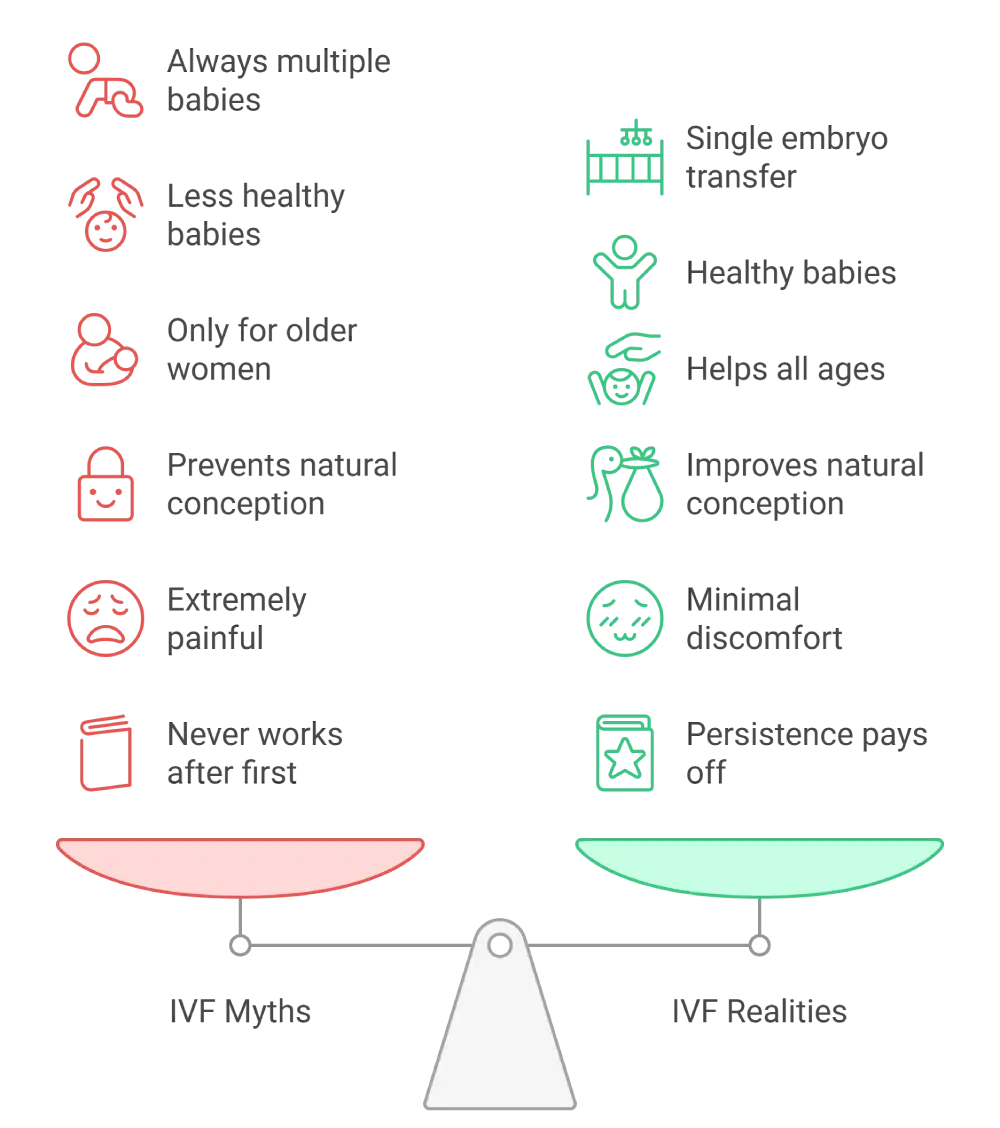
Don't let myths and misunderstandings guide your fertility decisions. Talk to qualified fertility specialists who can give you accurate, personalised information based on current medical evidence and your specific situation.
The Basic IVF Process (In Simple Words)
If you’re considering IVF or are just curious about how it works, you’re probably feeling overwhelmed by all the technical information out there. At its heart, IVF is simply helping nature along when conception isn’t happening naturally- instead of leaving everything you have a chance to change inside your body with the help of IVF.
Let’s break down what happens during IVF without the confusing medical terms.
Step 1 : Egg and Sperm Collection
You'll be on fertility drugs for 10 to 14 days to help more than one egg develop instead of just one as usual. When they're ready, you can get them quickly and easily while being lightly drugged. It's pretty simple: the sperm is taken on the same day.
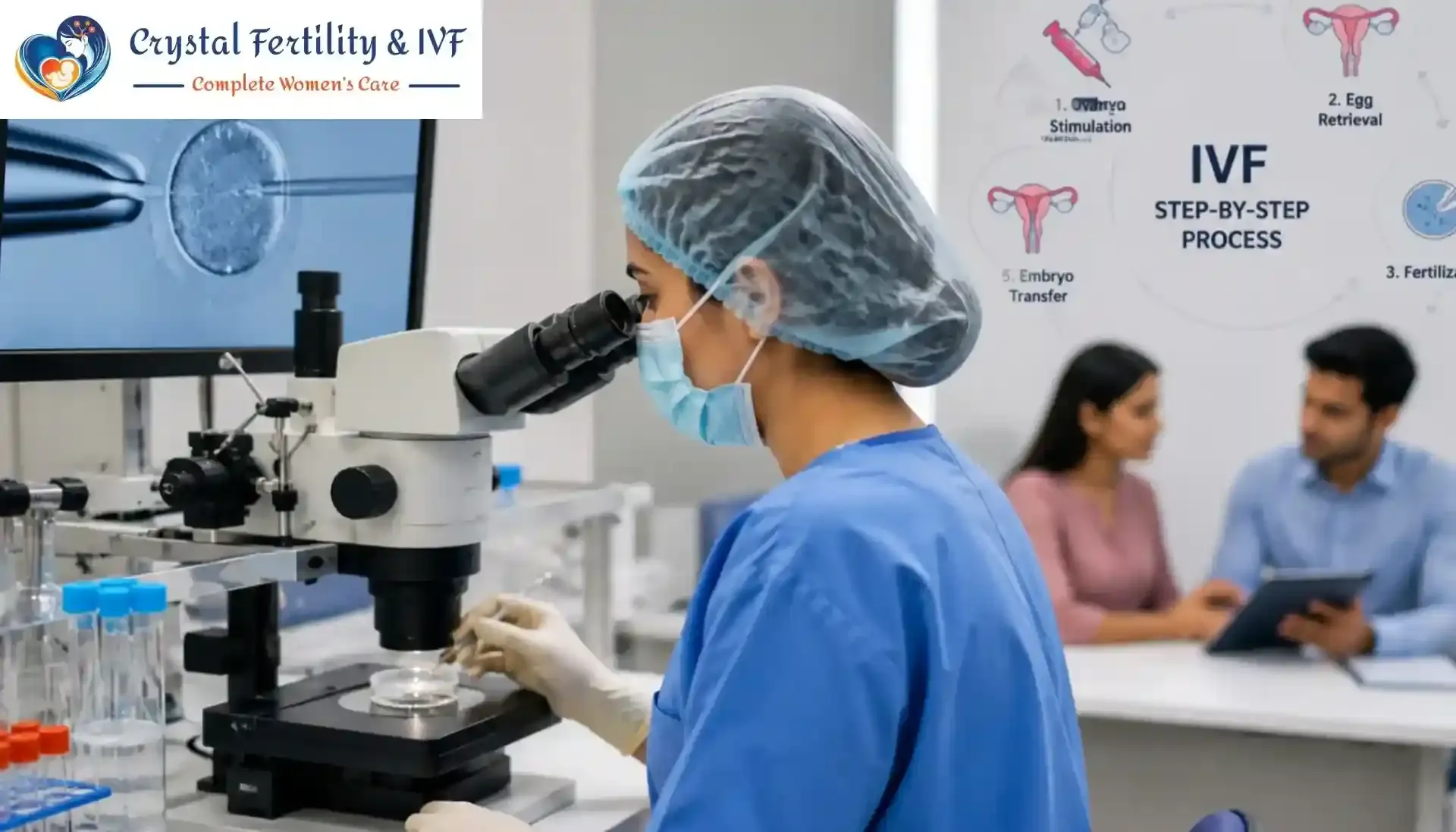
Step 2: Fertilization in the Lab
Here, the magic takes place in an incubator instead of your body. In the lab, the sperm and eggs are mixed, and if necessary, a single sperm is injected directly into each egg. They will monitor which cells grow well over the next few days.
Step 3: Embryo Transfer into the Uterus
The best embryo is put back into your uterus after three to five days. It's easier than you think, and you don't even need anaesthesia. It's just like any other test. The baby is put in the right place by a thin tube.
The hardest part is now: you have to wait two weeks to find out if it worked. It's been a long two weeks for many couples, but you've given it the best chance it can have.
IVF takes the guessing out of whether sperm and egg will actually meet. It also gives your embryo the best possible start before returning it to its rightful place.
Who Is IVF Recommended For?
Want to know if IVF could work for you? Here is a clear list of the most common IVF candidates and cases in which this method of infertility treatment is usually suggested:
Condition/Situation
|
Why IVF Helps
|
Success Considerations
|
Couples trying for 1+ years
|
Provides controlled fertilization environment when natural conception isn't happening
|
Higher success rates when started sooner rather than waiting longer
|
Blocked/damaged fallopian tubes
|
IVF bypasses tubes entirely - eggs and sperm meet in the lab
|
Excellent success rates since tubes are no longer a barrier
|
Low egg count (diminished ovarian reserve)
|
Maximizes fertilization chances with available eggs
|
Success depends on egg quality; may need multiple cycles
|
Male factor infertility
|
ICSI technique works with even small amounts of healthy sperm
|
Very effective for low count/motility issues
|
Endometriosis
|
Controlled environment reduces impact of inflammatory condition
|
Success varies by severity; often combined with other treatments
|
PCOS (Polycystic Ovary Syndrome)
|
Helps manage irregular ovulation through controlled stimulation
|
Good success rates with proper medication protocols
|
Unexplained infertility
|
Identifies and addresses unknown fertilization issues
|
Success rates similar to other fertility treatments
|
Age-related fertility decline
|
Maximizes chances with older eggs or allows use of donor eggs
|
Success decreases with age but still offers hope
|
Previous pregnancy losses
|
Allows genetic testing of embryos before transfer
|
Significantly reduces miscarriage risk
|
If you’ve been trying to conceive for over a year, and have diagnosed fertility issues, or fall into any of these categories, you’re likely a good candidate for IVF treatment. The key is consulting with fertility specialists who can check your specific situation and recommend which IVF treatment is best suited to approach for your journey to parenthood.
Key Facts About IVF You Should Know
Before starting your IVF journey, here are the most important IVF facts that every new hopeful parent needs to understand.
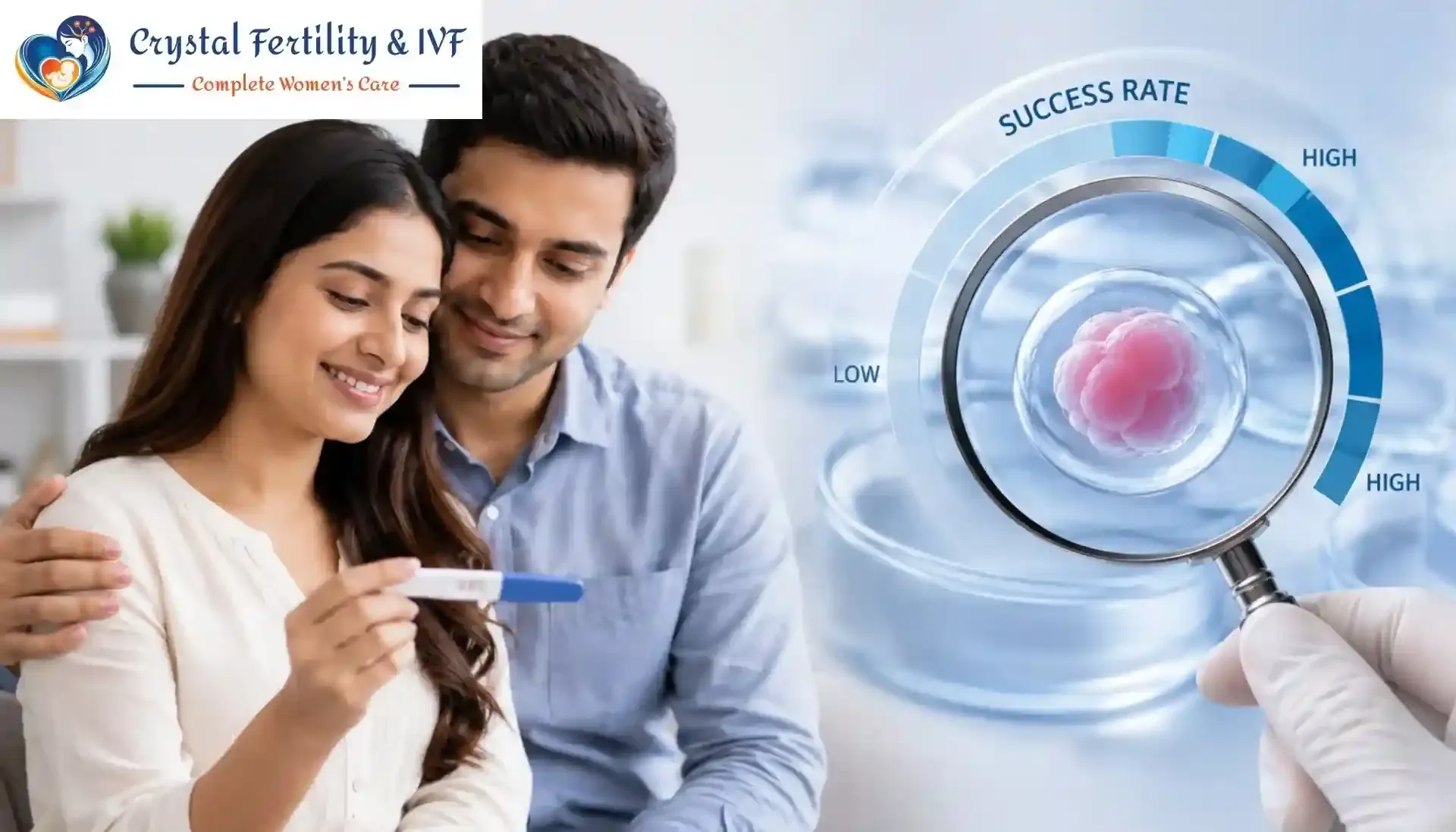
IVF Does Not Guarantee 100% Pregnancy Success - Rates may vary by age: women under 35 have a 40%-50 % success rate per cycle, while those over 40 have 10%-20% rates.
- Multiple cycles are often needed, this is completely normal, but it's not a failure
- What you should know about IVF is that it is a process that may not be a one-time solution..
- Even the best clinic and perfect conditions can't promise immediate success.
IVF Can Use Your Own or Donor Eggs and Sperm - You have flexibility to use your own gentic material, donor eggs , donor sperm , or even both
- Donor options make IVF possible for same-sex couples and single parents
- Women over 42 or those with very low egg reserves often benefit from donor eggs
- The choice between own vs. donor material is personal - there's no "right" answer
IVF Has Been Widely Practiced Worldwide Since 1978 - Louise Brown was born in 1978, marking over 45 years since IVF was first used. IVF has helped millions of babies be born around the world since then, showing that it does work. IVF procedures today are significantly improved compared to those of the past, mainly due to advancements in laboratory tools and medications. This means that you can benefit from decades of progress that have made IVF safer and more effective. The most enjoyable part? It's not a new experiment; IVF is a treatment that has been around for a long time and has helped many people have babies.
How Much Does IVF Cost and What's Included
One of the biggest concerns for couple considering IVF is the financial investment. Understanding IVF costs can help you plan better and avoid unexpected expenses during your fertility journey.
Cost Category
|
India (₹)
|
United States ($)
|
What's Included
|
Single IVF Cycle
|
₹1,50,000 - ₹3,00,000
|
$12,000 - $20,000
|
Complete basic cycle
|
ICSI Procedure
|
₹20,000 - ₹40,000
|
$1,500 - $3,000
|
Sperm injection technique
|
Genetic Testing
|
₹15,000 - ₹30,000
|
$3,000 - $7,000
|
Pre-treatment screening
|
Embryo Freezing
|
₹15,000 - ₹25,000/year
|
$600 - $1,200/year
|
Storage and preservation
|
Frozen Transfer
|
₹50,000 - ₹80,000
|
$3,000 - $5,000
|
Using frozen embryos
|
What's Included vs. Additional Costs
Typically Included
|
Additional Costs
|
Cost-Saving Tips
|
Initial consultations and testing
|
Pre-treatment genetic testing
|
Compare clinic prices
|
Ovarian stimulation medications
|
ICSI if needed
|
Ask about package deals
|
Monitoring appointments
|
Embryo freezing and storage
|
Look into financing programs
|
Insurance and Payment Options
Coverage Type
|
What's Typically Covered
|
Payment Alternatives
|
Full Coverage
|
Multiple cycles, medications
|
Clinic payment plans
|
Partial Coverage
|
Diagnostic testing only
|
Medical financing loans
|
No Coverage
|
Nothing fertility-related
|
Package deals for multiple cycles
|
Employer Benefits
|
Varies by company policy
|
International treatment
|
The Investment Perspective: The costs of IVF may seem high, but keep in mind that you're putting in your family. A lot of couples decide that the money spent is worth it when they hold their baby. Start planning early, look at all of your choices, and don't let the cost stop you from becoming a parent.
Final Thoughts – IVF as a Hopeful Beginning
As we wrap up this guide, it's important to remember that IVF is much more than just a medical procedure - it represents hope, possibility, and a new chapter in your family-building story.
Your path to becoming a parent may not be exactly what you planned, but that doesn't make it any less critical. IVF isn't just a scientific process; it's also an emotional one that gives you hope and the chance to hug your dream baby.
See a fertility doctor right away to find out if IVF is right for you. This is the most important thing you can do right now. At Crystal Fertility, we understand how stressful this process can be. That's why we offer free meetings to help you learn about your choices and make a plan that works for you. Our skilled and caring fertility experts are here to help you through every step of the process.
Over the past 45 years, IVF has enabled millions of families worldwide to start their own families. This could be the happy start of a beautiful family story for you. Remember that you're not on this road by yourself and take things one step at a time.
If cost is part of your decision-making, our breakdown of IVF cost in Delhi covers what's typically included at each stage.
FAQ (Frequently Asked Questions):
ICSI is used to help men who are having trouble getting pregnant. It includes injecting a single sperm directly into each egg.
Yes, most people keep working and only take time off for monitoring appointments and the egg retrieval process.
Success rates vary by age. For women under 35, the rate is 40–50% per cycle, while for women over 40, it's 10–20%.
Injections are done with very small needles, egg removal is done while the person is sedated, and embryo transfer feels like getting a pap smear.
Helpful Resources

Medically Reviewed by
Dr. Nidhi Sharma, MBBS, DGO, DNB
Dr. Nidhi Sharma is a fertility specialist with an MBBS, a DGO in Obstetrics & Gynaecology, and a DNB, bringing over 20 years of experience in reproductive medicine. She leads the IVF, ICSI, and fertility preservation programmes at Crystal Fertility & IVF Center in Dwarka, New Delhi.