Introduction – Finding Hope Through Donor Egg IVF
Have you been told that your eggs no longer work? And your age or lack of ovarian reserve means you can't have children through IVF anymore? What if we told you that even if you're over 40, you can use donor eggs in IVF and have a 60–75% success rate each cycle? It's not a maybe. The success rate for donor egg IVF stays high because you use young, healthy eggs and YOUR BODY carries the baby. You have a baby. You're mom. The meaning of IVF with donor eggs is very simple: the genes come from a donor, but the baby growing inside you, the beating you hear, and the life you give the world are all yours.
Many women thought their story was over until they found this choice. If you're tired from failed IVF rounds or your doctor told you that you have a low egg reserve, read on. We'll talk about real success rates, what affects your chances, and how to get ready for this journey that will change your life. It's possible that your baby is already here.
Understanding IVF with Donor Eggs
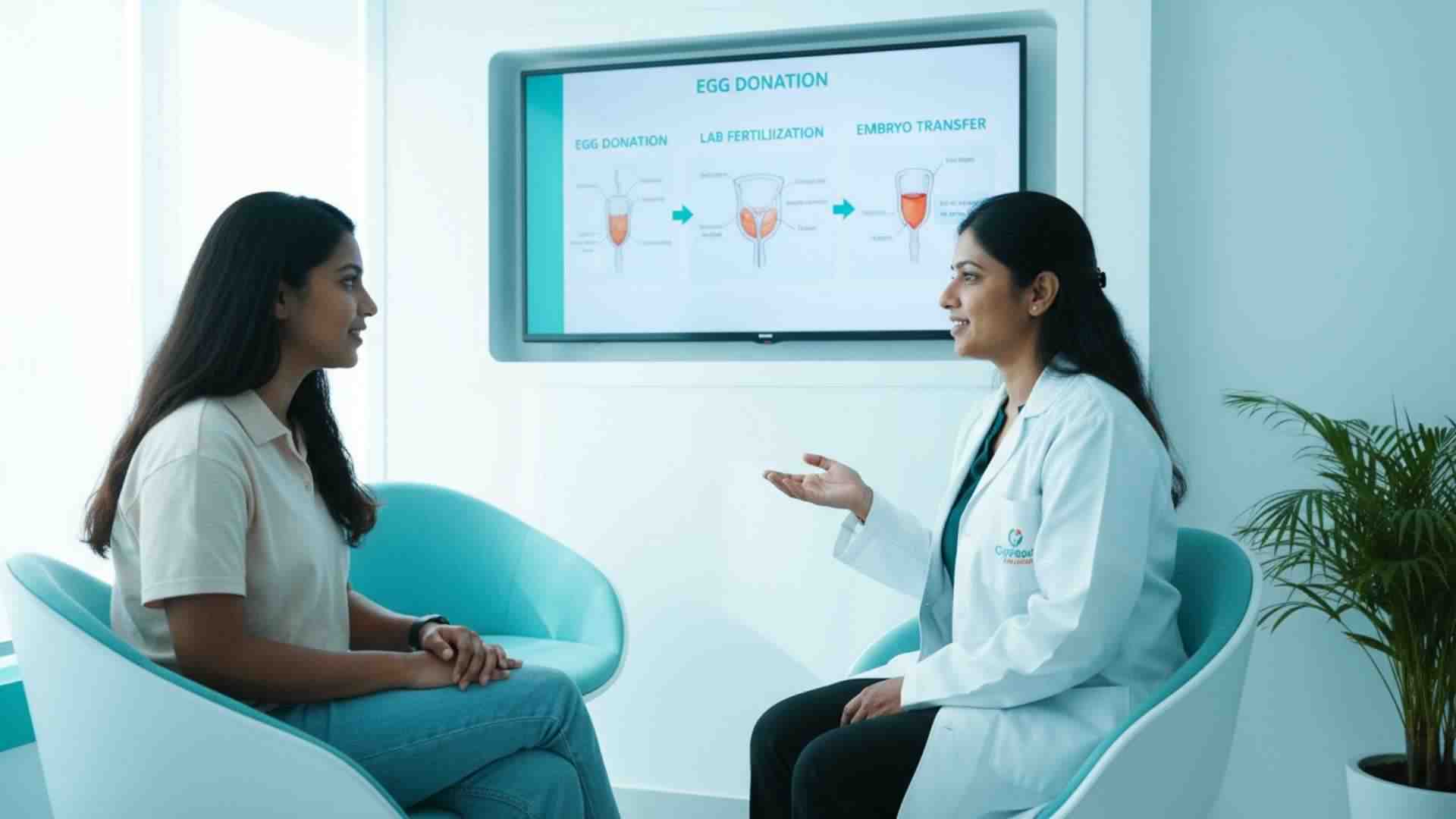
"How does donor egg IVF actually work?" Now let's break this down in a way that makes sense. During donor egg IVF, embryos are made from eggs from a younger, healthy donor and then put into your uterus. You are pregnant and on a trip; the eggs are just the beginning. This is a step-by-step guide to the whole donor egg process.
How IVF with Donor Eggs Works
Step 1 – Donor Selection and Screening
We begin by choosing a young, healthy donor (usually aged 21–32) who passes thorough medical, genetic, and emotional screening. Many ask, “Will the donor ever know us?” — No, it’s a confidential and compassionate process designed only to help you grow your family.
Step 2 – Egg Retrieval and Fertilisation
The donor’s mature eggs are gently collected and fertilised in our lab with your partner’s or donor’s sperm. You might wonder, “Is it safe for her?” — yes, completely. At this step, egg donation and fertilisation make new embryos, which is the real start of your story.
Step 3 – Embryo Culture and Transfer
Embryos are given care for the next few days, until they reach the blastocyst stage. Your uterus is then prepared to receive one strong embryo. Some women ask, “Will the baby still feel like mine?” — absolutely. You’ll be the one carrying, nourishing, and giving birth. That connection is entirely yours.
Step 4 – Pregnancy Confirmation
After two weeks, we perform a beta hCG test to confirm pregnancy. The wait can be emotional — many ask, “How soon will I know if it worked?” A positive result, followed by the first ultrasound, is when your donor egg IVF success becomes real — the first heartbeat, the first tear of joy.
What Is the Actual Success Rate of IVF with Donor Eggs?
Here’s the truth — IVF with donor eggs gives real hope to women who once thought it was too late. The IVF donor egg success rate is much higher than traditional IVF because the eggs come from young, healthy donors. According to CDC, ESHRE, and SART, the average IVF donor egg pregnancy rate is around 65%–80%, depending on your age and health. Even women in their 40s and 45+ see encouraging results — the egg donor success rates over 40 and donor egg success rates over 45 are far better than using your own eggs. Whether you’re using fresh or frozen donor eggs, or even exploring embryo adoption, the success rates stay strong.
Recipient Age
|
Clinical Pregnancy Rate
|
Live Birth Rate
|
Insight
|
Under 35
|
75–80%
|
70–75%
|
Excellent results thanks to strong donor egg quality.
|
35–40
|
70–75%
|
65–70%
|
Great outcomes with proper uterine preparation.
|
40–45
|
65–70%
|
60–65%
|
Far higher egg donation success rates over 40 than own-egg IVF.
|
45+
|
55–60%
|
50–55%
|
Encouraging donor egg success rates over 45 when the uterus is healthy.
|
Why the Success Rate Is Higher with Donor Eggs
Healthy and young donors: Women in their 20s who give donor eggs go through a lot of tests to make sure they are healthy. You can start over with a healthy body when you are young.
Healthier embryos, stronger chances: The chances of having a healthy baby are higher when the eggs are healthy. This is because healthy embryos are more likely to form.
Your womb still works beautifully: That's right, your uterus can still carry a baby properly, even if your eggs are old. You are not important; the quality of the egg is.
Modern science makes it safer: Through ICSI and blastocyst transfer, techniques like making it safer for embryos to grow stronger and more naturally, hope is turned into real results.
Donor Egg IVF vs Own-Egg IVF – A Clear Comparison
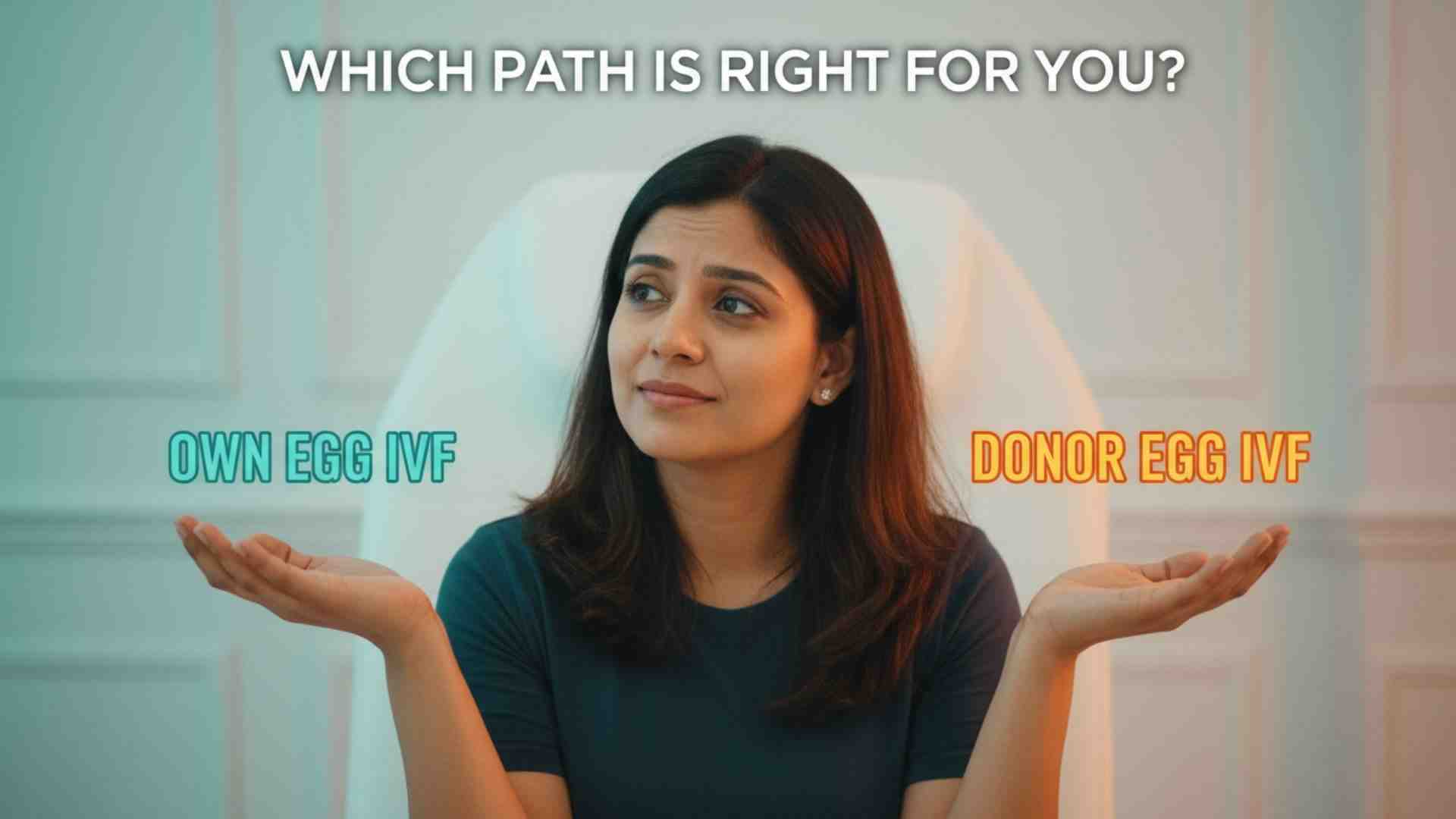
"Should I try with my own eggs or is it time to think about donor eggs?" you may be asking yourself right now. It's a question many women struggle with, especially after going through multiple IVF cycles. Okay, let's be honest about it and help you figure out the way that could lead to success.
When we compare donor egg vs own egg IVF, the difference is often in one key factor: Egg quality is often the most important difference. For younger women with healthy ovaries, using their own eggs can still bring good results. But as we move past 35, egg quality naturally declines — and that's where IVF with donor eggs gives your body the boost it needs. Think of it as giving yourself another chance, not giving up.
Here's how the numbers look when we put them side by side:
IVF Donor Egg vs Own Egg Success Rate Comparison
Treatment Type
|
Average Success Rate
|
Best for Whom
|
Key Difference
|
IVF with Own Eggs
|
25–40% (under 35 years)
|
Women under 35 with good egg reserve
|
Results depend entirely on egg quality and age.
|
IVF with Donor Eggs
|
60–75%
|
Women 35+ or with poor ovarian reserve
|
Success depends on uterine health, not egg age — making it more reliable.
|
Key Factors Influencing IVF Success with Donor Eggs
You might be wondering — “I’m using donor eggs, so why does success still vary from person to person?” The truth is, while donor eggs give a strong head start, there are still a few key things that shape your IVF outcome. The factors influencing IVF success with donor eggs aren’t just medical, they’re personal too. From the health of the donor and the sperm to your own uterus, lifestyle, and mindset, every part plays a quiet but powerful role.
Let’s look at what really makes a difference and how a few simple changes can bring you closer to holding your baby.
1. Donor Egg Quality
The egg is the first step. One of the most important things for IVF success is the quality of the donor egg. Younger donors often have eggs that are healthier and have stronger genes. This means that the embryos are better and there are higher chances of getting pregnant.
"Does my age still matter?" you may think.
But it doesn't really matter. IVF can work as well in your 40s as it did when you were in your 20s if you use a donor egg. This is because the quality of the donor egg is what matters, not your own. That's what makes gift egg IVF so special.
2. Sperm Quality and DNA Integrity
It's not just the woman who can have a baby through IVF; about 40% of impotence is caused by poor-quality sperm. Not being able to move the sperm well or DNA damage can stop a pregnancy.
What can you do? A healthy diet, getting enough sleep, and not smoking can all help improve the health of sperm DNA and naturally increase the success rate of donor egg IVF.
3. Recipient’s Uterine Health
Your uterus is where the baby will first live, so take care of it too.
Checklist for a healthy uterus:
- Endometrial thickness of 8 mm or more
- Hormone balance (estrogen and progesterone)
- No polyps or fibroids
Afraid: "Can my uterus still hold a baby?"
Of course. Your uterus can still give birth to a healthy baby, even if the quality of your eggs has gone down.
4. IVF Lab Standards and Embryologist Expertise
A skilled lab team is responsible for every birth. ICSI and blastocyst transfer are two advanced methods that help make embryos stronger. A good lab is important for donor egg IVF success because it makes sure that every baby gets the care it needs.
5. Lifestyle and Emotional Readiness
Your body needs peace sometimes. Hormones and implantation can be harmed by stress, not getting enough sleep, and fear.
Try this:
Thinking: "Can the way I think really change things?"
A calm mind helps a calm body, and that balance is what often turns hope into pregnancy.
The Impact of Age on Donor Egg IVF Outcomes
"I'm 42. Is it too late for donor egg IVF to work for me?"Here's the beautiful truth: your age matters WAY less with donor eggs than you think. Why? Because when it comes to donor egg IVF after 40 or even IVF for older women in their mid-40s, the success depends on the donor's age, not yours. The donor is young (usually 21-32), so you get the fertility potential of someone in their 20s — even if you're 45.
Your uterus ages much more slowly than your eggs. With proper hormone preparation, your body can carry a pregnancy beautifully at any age. Let's look at what donor egg IVF after 35 really means for your success chances.
Donor Egg IVF Success Rates by Recipient Age
Your Age
|
Live Birth Rate
|
What You Should Know
|
30–34 years
|
75%+
|
Best possible results — strong uterine health plus young donor eggs
|
35–39 years
|
70%+
|
Tiny drop, but still excellent overall outcomes
|
40–44 years
|
60–65%
|
Focus shifts to uterine readiness and hormone prep — success stays high
|
45+ years
|
55–60%
|
Hormonal preparation is crucial, but real success is absolutely possible
|
The key takeaway? You have more than a 50% chance of winning each cycle, even if you are 45 or older. If you use your own eggs at age 43, you have less than a 5% chance of success. Donor eggs totally change the game. When you use young, healthy donated eggs, age doesn't matter.
Fresh vs Frozen Donor Eggs – Does It Affect Success?
"Should I use fresh donor eggs or frozen donor eggs? Does freezing hurt my chances?" That is a great question. There are changes between the two, but they both work great. When comparing frozen to fresh donor eggs for IVF, there used to be a bigger difference in success rates. However, new freezing technology (called vitrification) has made that difference much smaller.
Here's what you need to know about the success rate of fresh vs. frozen donor eggs:
Fresh vs Frozen Donor Eggs: Success Rate Comparison
Type
|
Success Rate
|
Benefits
|
Limitations
|
Fresh Donor Eggs
|
65–75%
|
Higher fertilization rates, slightly better implantation
|
You and donor must sync cycles — takes time to coordinate
|
Frozen Donor Eggs
|
55–65%
|
Available immediately, no waiting, more flexible timing
|
Slightly lower survival rate after thawing
|
"So fresh is always better?" No, not always. In terms of number, fresh eggs do have a small edge.
However, frozen eggs have HUGE benefits: you don't have to wait months for your cycles to sync up, you can start your cycle whenever YOU'RE ready, and thanks to modern vitrification (flash-freezing), almost all eggs survive warming intact—often 90%+.
A lot of women choose frozen because it lets them move forward faster without having to worry about timing their cycle with a donor's. And really? A 55–65% success rate is still a very high number.
Screening and Genetic Testing for Donor Programs
After learning all this information, you might be thinking: "But how will I actually know if the donor eggs are healthy and safe?"
We get it—you're relying on someone else's eggs to help you have a baby. That's really big. Let's talk about the safety nets that are in place, because, truly? For donor screening IVF, the screening process is very thorough. Know that every donor goes through many tests before they are accepted, so you can breathe easier.
Donor Medical Screening Checklist
"What does a donor actually go through before I can use her eggs?"
Here's what every single donor has to do:
- AMH and FSH Testing- This checks her ovarian reserve to make sure she has enough healthy eggs to share.
- Infectious Disease Screening- checking for HIV, hepatitis, herpes, and any other diseases that could hurt you or your baby.
- Family and Genetic History- A detailed look into the medical history of her family. Heart trouble? Cancer? Problems with genes? It's not possible for her if there are red flags.
- Genetic Carrier Screening- A blood test will be done to see if she has the genes for more than 100 diseases, such as cystic fibrosis or sickle cell. You would know before going ahead with the plan if she carries something that your partner also carries.
- Psychological Evaluation- A mental health professional checks to see if she's mentally ready to donate and that she fully knows what it means.
PGT-A: One More Way to Feel Confident
What is PGT-A? After your embryos are created in the lab, scientists take a few cells from each one and test for chromosomal issues — extra or missing chromosomes that can cause miscarriage or conditions like Down syndrome. You only transfer embryos that are chromosomally normal. Some couples add genetic testing donor egg embryos through something called PGT-A. It's optional, but let's talk about what it offers.
What It Gives You
|
Why It Matters
|
Better odds per transfer
|
You're choosing the healthiest embryo to transfer first
|
Lower miscarriage risk
|
Most early losses happen due to chromosomal issues — this screens them out
|
Peace of mind
|
You know the embryo going in is genetically healthy
|
Possibly fewer cycles
|
Higher chance of success on your first try
|
"But the donor is young. Don't her eggs already have good genetics?"
Exactly! You're absolutely right. Younger eggs (from donors aged 21-32) naturally have way fewer chromosomal problems than eggs from women over 35 or 40. So plenty of people skip PGT-A with donor eggs and go on to have perfectly healthy babies.
How to Improve the Chances of Success with Donor Egg IVF
You've chosen donor eggs. You've made the hard decisions, found your donor, and now you're here. And probably lying awake wondering: "Is there anything I can actually DO to help this work?"
Yes. While the donor gives you healthy eggs, YOUR body is where the baby grows. Your uterus, your health, your stress levels — they all matter. And here's the good part: there are real ways to improve IVF success with donor eggs. You're not helpless here. You can actually do something.
Preparing Your Body Before Embryo Transfer
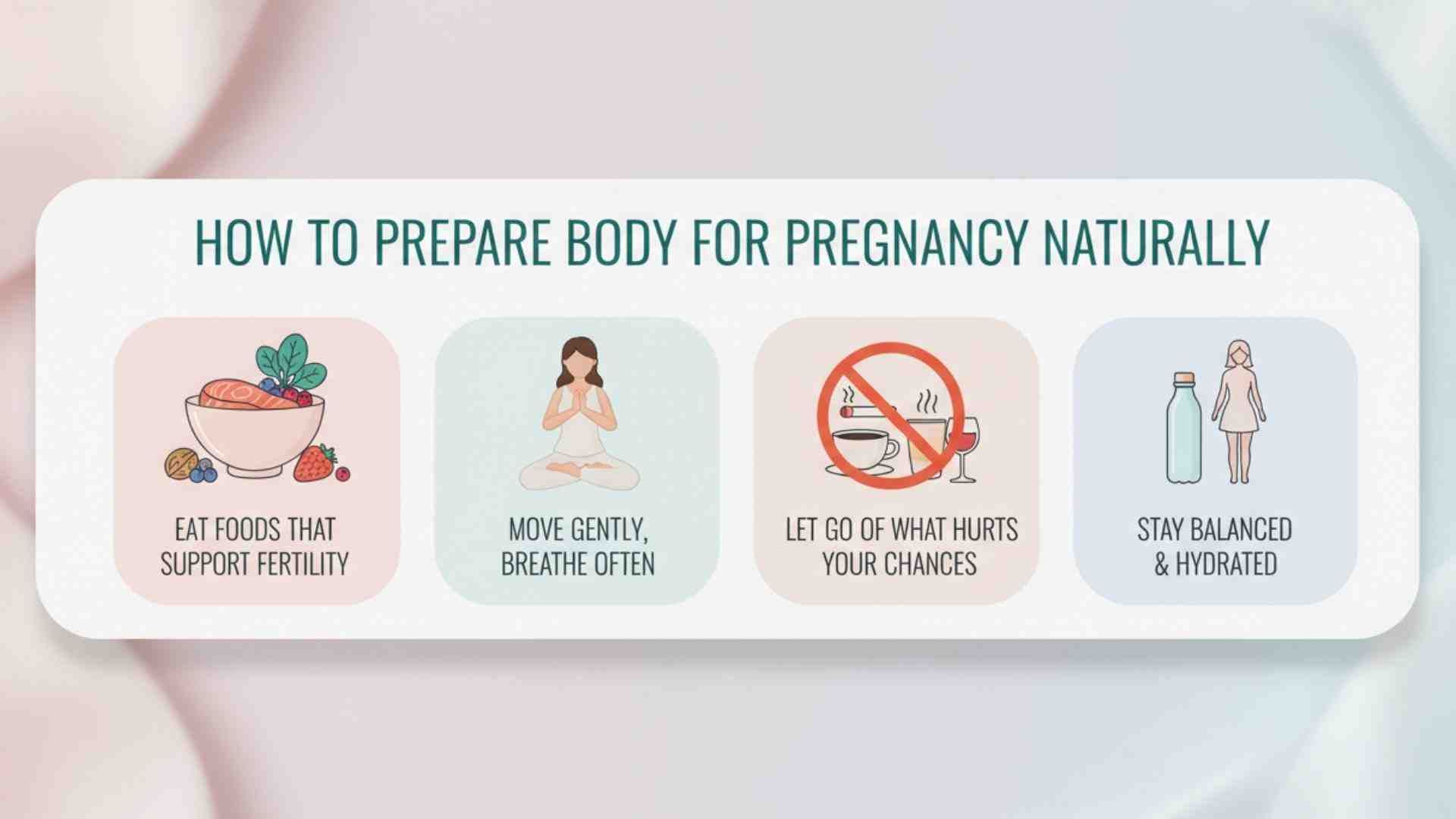
What you do at home matters just as much as what happens in the clinic. This is how to prepare body for pregnancy naturally — not fixing anything "broken," just giving your body every advantage.
Clinical Measures That Help to improve donor eggs
Your doctor has tools too. Here's what they'll do: T
- Time your lining perfectly — Estrogen and progesterone prep your uterus. They monitor with ultrasounds to get it exactly right.
- Place the embryo precisely — Real-time ultrasound guides where the embryo goes. Precision matters.
- Choose the strongest embryo — Day 5 blastocysts have proven they can develop. Higher success rates.
- Test your implantation window (optional) — ERA testing finds your exact receptive hours. Helpful if past transfers failed.
Cost, Accessibility, and Success of donor egg in India
Planning to use egg donation for IVF in India? You should think about your budget as soon as possible. Not only is it about money, but also about being ready for every move. "How much does donor eggs for IVF cost in India?" is a question several people often ask us. "Is it something we can really afford?"
The good news is that donor egg IVF in India is much cheaper than in many other places, and you can still get modern technology, skilled doctors, and great care. If you know the average cost range, you can make better financial choices, whether you're just starting to look at your options or you're already planning your cycle.
Typical Cost of donor eggs (India)
Component
|
Average Cost (INR)
|
Description
|
Donor Screening & Compensation
|
₹60,000 – ₹90,000
|
Covers medical screening, legal formalities, and the donor’s compensation.
|
IVF Cycle & Embryo Transfer
|
₹2 – ₹4 lakh
|
Includes egg fertilization, lab work, and transferring the embryo to your uterus.
|
Medication & Hormone Support
|
₹40,000 – ₹1 lakh
|
Medicines to prepare your body and balance hormones for implantation.
|
Conclusion – Donor Egg IVF Restores Possibility
While working as a fertility expert, I've seen many couples come in with doubts about their ability to have children, but after seeing me, they left with new hope. That's the great thing about egg donation for IVF: it gives you a second chance when it seems like you can't do it naturally.
It is more than 65% of the success rate that egg donation for IVF works. Depending on age, egg quality, and uterus health, the rate is often even higher. Each successful IVF donor egg pregnancy shows us that biology isn't the only thing that makes someone a parent. It's also important to have love, courage, and the will to never give up. So please don't give up if you've been thinking, waiting, or are not sure what you want to do. There are advanced treatments, caring doctors, and reliable methods to make your dream come true.
You may still have many doubts with you, but we are here with you. You can book an appointment for free with Dr Nidhi at Crystal Fertility Clinic. This will help you to take the first step towards a healthy pregnancy and a family you once dreamed of. When you plan your trip, please be careful, believe, and know that you will never be by yourself. We will be with you every step of the way as you begin your story of hope for fertility.
FAQ (Frequently Asked Questions):
Yes, babies created through donor egg IVF are just as healthy as babies born naturally. The danger of abnormalities is quite low because donor selection includes comprehensive checks for genetic and viral diseases.
When you have donor egg IVF, your doctor will usually transfer 1 to 2 embryos, depending on your age, medical history, and what they think is best for you. Transferring more doesn't always make things more likely to work, and it may make it more likely that you will have more than one pregnancy.
It may happen. A lot of women get pregnant on their first donor egg IVF round because embryos made from young, healthy donor eggs are more likely to implant. But the outcome is also affected by things like the health of the uterus, lifestyle, and stress levels.
Yes, donor egg IVF usually works better than using your own eggs, especially if you're over 35 or have a poor ovarian reserve. That's because donor eggs usually come from women between the ages of 20 and 30, when the eggs are at their best and the chromosomes are healthy.
The success rate of IVF using donor eggs is usually between 65% and 75% for each embryo transfer. This depends on things like the clinic's experience, the quality of the eggs, and the health of the uterus. Success rates are frequently greater than those of regular IVF because the eggs come from younger, healthier donors.
Helpful Resources

Medically Reviewed by
Dr. Nidhi Sharma, MBBS, DGO, DNB
Dr. Nidhi Sharma is a fertility specialist with an MBBS, a DGO in Obstetrics & Gynaecology, and a DNB, bringing over 20 years of experience in reproductive medicine. She leads the IVF, ICSI, and fertility preservation programmes at Crystal Fertility & IVF Center in Dwarka, New Delhi.