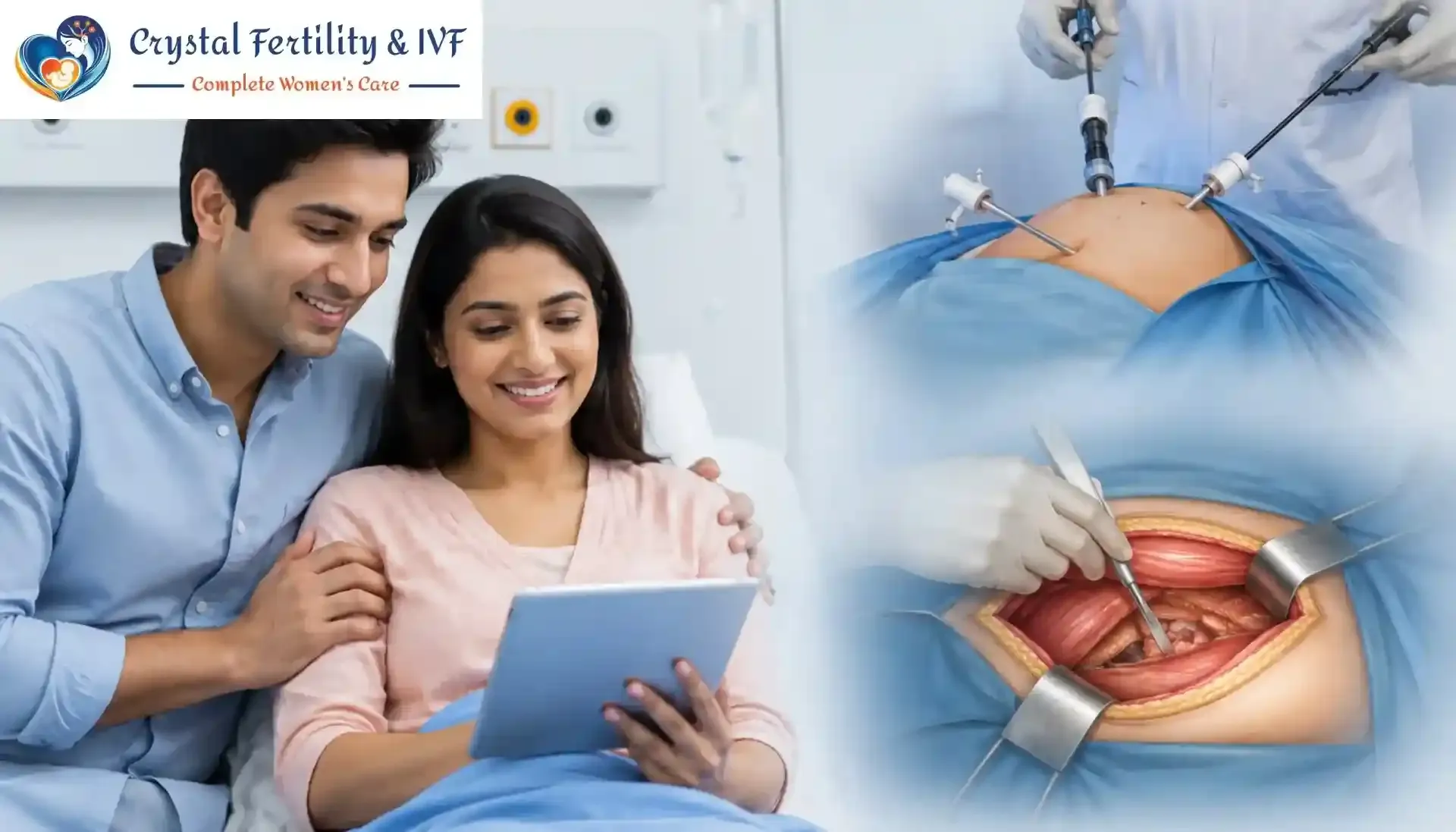
If a physician suggests surgery, one of the most frequently asked questions that patients ask is about laparoscopic or open surgery. Knowing the difference between these two approaches to surgery will help you make an informed decision regarding the treatment you choose. We at Crystal Fertility consider educating patients an important aspect of high-quality health care. Although both surgical procedures are successful, the decision is dependent on the patient's health, overall health, as well as the complexity of the surgery. In many instances, minimally invasive laparoscopic surgery is the most preferred option since it provides quicker recovery time and fewer complications than open surgery.
Understanding Open Surgery
Open surgery is the most common surgical procedure where the surgeon creates a bigger incision that allows direct access to the tissue or organ that is affected. This procedure has been practiced effectively for many years and is essential for certain complicated or urgent procedures.
Surgery with open-heart surgery is generally advised in the following situations:
- The problem is very complicated.
- There is a lot of internal bleeding.
- Large tumors must be eliminated.
- Multiple organs require surgical access.
- It is imperative to intervene immediately.
Although open surgery is extremely effective in many instances, it typically requires longer recovery time and more surgical wounds.
Understanding Laparoscopic Surgery
Laparoscopic surgery, commonly described as keyhole or minimally invasive surgery, involves making small incisions that allow laparoscopes (a tiny camera) and surgical instruments that are specially designed are introduced.
The surgeon performs the procedure while watching high-definition pictures on a screen, which allows for better accuracy.
Presently, laparoscopic surgery in Delhi is used extensively to treat a variety of gynecological, digestive, and fertility-related issues such as:
- Ovarian cysts
- Fibroids
- Endometriosis
- Blocked fallopian tubes
- Gallbladder disorders
- Hernias
- Adhesions to the Pelvic
Its low-invasive nature makes it one of the most popular surgical procedures in the field of modern medicine.
Open Surgery vs Laparoscopic Surgery: Key Differences
Understanding laparoscopic versus open procedure involves comparing a number of key elements that affect both the procedure and the healing process.
1. Size of Incisions
One of the most significant distinctions is the size of the incision made during surgery.
Open Surgery
- It requires one big cut.
- Creates a scar larger than the original.
- Greater tissue exposure.
Laparoscopic Surgery
- Utilizes multiple small cuts.
- Very little scarring.
- Reduced tissue damage to the tissue.
In the case of many people, fewer scars can be a significant cosmetic benefit.
2. Surgical Precision
Laparoscopic surgery is performed using high-definition cameras to give magnified images of organs inside the body.
This lets surgeons:
- Perform with greater precision.
- Keep healthy tissue.
- Improve the visualisation of intricate structures.
Open surgery allows the ability to access organs directly, but might not always provide the same degree of enhanced visualization.
3. Recovery Time
Recovery is among the most prominent differences in laparoscopic versus open surgery.
Open Surgery
Patients frequently require:
- Longer hospital stays
- A few weeks of recuperation
- A delayed return to work
Laparoscopic Surgery
Patients usually experience:
- A shorter hospital stay
- Faster healing
- A quicker return to normal activities
The speedier recovery is one of the primary benefits associated with Laparoscopic Surgery and contributes greatly to the patient's satisfaction.
4. Pain After Surgery
Because open surgery requires larger incisions, patients generally experience more discomfort post-operatively.
The most common outcome of laparoscopic surgery is:
- Less pain
- The need for pain medicine is less
- Greater comfort during recovery
Another reason is that procedures that are minimally invasive have become more and more well-known.
5. Risk of Infection
Every surgical procedure has a possibility of an infection.
But since laparoscopic surgery makes use of shorter incisions usually suffers from:
- Lower infection risk
- More rapid wound healing
- Reduction of postoperative complications
The smaller size of wounds can also reduce the chance of developing wound-related problems when compared with traditional open surgery.
6. Blood Loss During Surgery
One of the most significant benefits of laparoscopic surgery is reduced blood loss.
The improved visualization allows surgeons to perform delicate surgeries while minimizing the risk of injury to blood vessels and tissues.
However, open surgery could result in more blood loss, based on the degree of complexity involved in the procedure.
7. Hospital Stay
Hospitalization is different between these two methods.
Open Surgery
Patients are admitted to the hospital for a few days, based on the treatment.
Laparoscopic Surgery
Most patients can return home in 24 to 48 hours, based on their health condition.
Shorter hospital stays that are shorter reduce the time to recover and medical expenses.
When is Open Surgery Necessary?
Although laparoscopic surgery can provide numerous advantages, open surgery is the preferred option in some circumstances.
Doctors can advise open surgery in the following situations:
- Insomniac abdominal infections that are extensive
- Large malignant tumors
- Severe trauma
- Complex reconstruction procedures
- Scar tissue that is extensive from prior operations
- Certain emergencies
The decision is always based on the medical condition of the patient and the surgeon's assessment of his clinical condition.
When is Laparoscopic Surgery Recommended?
Laparoscopic surgery is usually advised for patients who require treatment for:
- Endometriosis
- Ovarian cysts
- Uterine fibroids
- Tubal obstruction
- Ectopic pregnancy
- Adhesions to the Pelvic
For women with fertility issues, laparoscopic surgery can enhance reproductive health by addressing issues that hinder conception.
The staff at Crystal Fertility, experienced surgeons, take the time to carefully examine each patient to determine if minimally invasive surgery is the best procedure.
Benefits of Laparoscopic Surgery for Fertility
Certain gynecological issues can affect fertility through altering the normal anatomy of reproduction.
Certain significant benefits that can be derived from Laparoscopic Surgery in fertility treatment include:
- Removal of ovarian cysts
- Treatment for endometriosis
- Correction of tubal blockages
- The removal of pelvic adhesions
- Natural conception is more likely to be successful.
- More preparation for IVF treatment
As a reputable Best Fertility Clinic in Delhi, Crystal Fertility often integrates laparoscopic procedures into customized fertility treatment plans when it is medically recommended.
Laparoscopic Surgery Cost in Delhi
Patients often ask about the costs of laparoscopic surgery in Delhi before undergoing treatment.
The total cost is based on many factors, such as:
- Surgery type
- Complexity of the disease
- The experience of a surgeon
- Hospital infrastructure
- Diagnostic tests
- Hospitalization
While costs for laparoscopic surgery in Delhi can vary from one patient to the next, minimally invasive procedures usually result in lower costs for healthcare overall due to shorter hospitalization times along with faster recovery and less complications post-operatively.
Instead of focusing on the cost, patients should be aware of the quality of care as well as the expertise of the team treating them.
Why More Patients Prefer Laparoscopic Surgery in Delhi
There is a growing demand for laparoscopic surgical procedures in Delhi, which has been steadily increasing due to advances in technology for surgery and better outcomes for patients.
Patients usually opt for laparoscopic procedures because they provide:
- Very little scarring
- Speedier recovery
- Reduction of postoperative pain
- Lower rates of infection
- More attractive results in cosmetics
- A quick return to everyday life
This has made laparoscopic surgery the ideal procedure for a variety of gynecological and fertility-related procedures.
Choosing the Right Surgical Centre
Finding the right fertility clinic or hospital is as crucial as choosing the right surgical procedure.
If you are evaluating a health care provider, take into account:
- The qualifications and experience of the surgeon
- Modern laparoscopic equipment
- Standards for infection control
- Comprehensive postoperative care
- Patient reviews
- Transparent communication
As one of the top clinics for fertility located in Delhi, Crystal Fertility utilizes cutting-edge laparoscopic technology and experts with years of experience to provide secure, efficient, and personalized care for patients.
Open Surgery vs Laparoscopic Surgery: Which is Better?
When it comes to comparing open surgery and laparoscopic surgery, there isn't a one-size-fits-all answer that is applicable to all patients.
Laparoscopic surgery is usually highly regarded because it can provide:
- Smaller incisions
- Less pain
- Speedier recovery
- Lower infection risk
- Shorter hospital stays
However, open surgery is crucial for specific critical or emergencies where the need for direct access to surgery is essential.
The most effective approach is based on the diagnosis you receive, your general health, and your surgeon's recommendations.
Why Choose Crystal Fertility?
Crystal Fertility provides cutting-edge laparoscopic surgery, aided by highly skilled specialists and the latest technology.
Patients gain from:
- Treatment plans that are customized to your needs
- Innovative methods of minimally invasive surgery
- Complete fertility assessment
- Expertly trained gynecological surgeons
- Transparent treatment guidance
- Compassionate patient care
We aim to provide a safe, scientifically supported treatment to help patients recover in a comfortable manner and obtain the most optimal outcomes.
Conclusion
Knowing the difference between open and laparoscopic surgery allows patients to make informed choices about their health care. While both approaches to surgery are appropriate in the modern world of medicine, laparoscopic surgery is now the most preferred choice for many diseases due to its quicker recovery, less pain, minimal scarring, and lower risk of complications.
If you're thinking about the procedure of laparoscopic surgery in Delhi, it is crucial to talk with the expertise of a surgeon experienced in this field who will provide the most suitable treatment for your situation. At Crystal Fertility, our team of experts combines the latest surgical techniques with caring medical care to offer individualized treatment solutions that are focused on your health, comfort, and long-term health.
Helpful Resources

Medically Reviewed by
Dr. Nidhi Sharma, MBBS, DGO, DNB
Dr. Nidhi Sharma is a fertility specialist with an MBBS, a DGO in Obstetrics & Gynaecology, and a DNB, bringing over 20 years of experience in reproductive medicine. She leads the IVF, ICSI, and fertility preservation programmes at Crystal Fertility & IVF Center in Dwarka, New Delhi.