
Prenatal & Postnatal Yoga
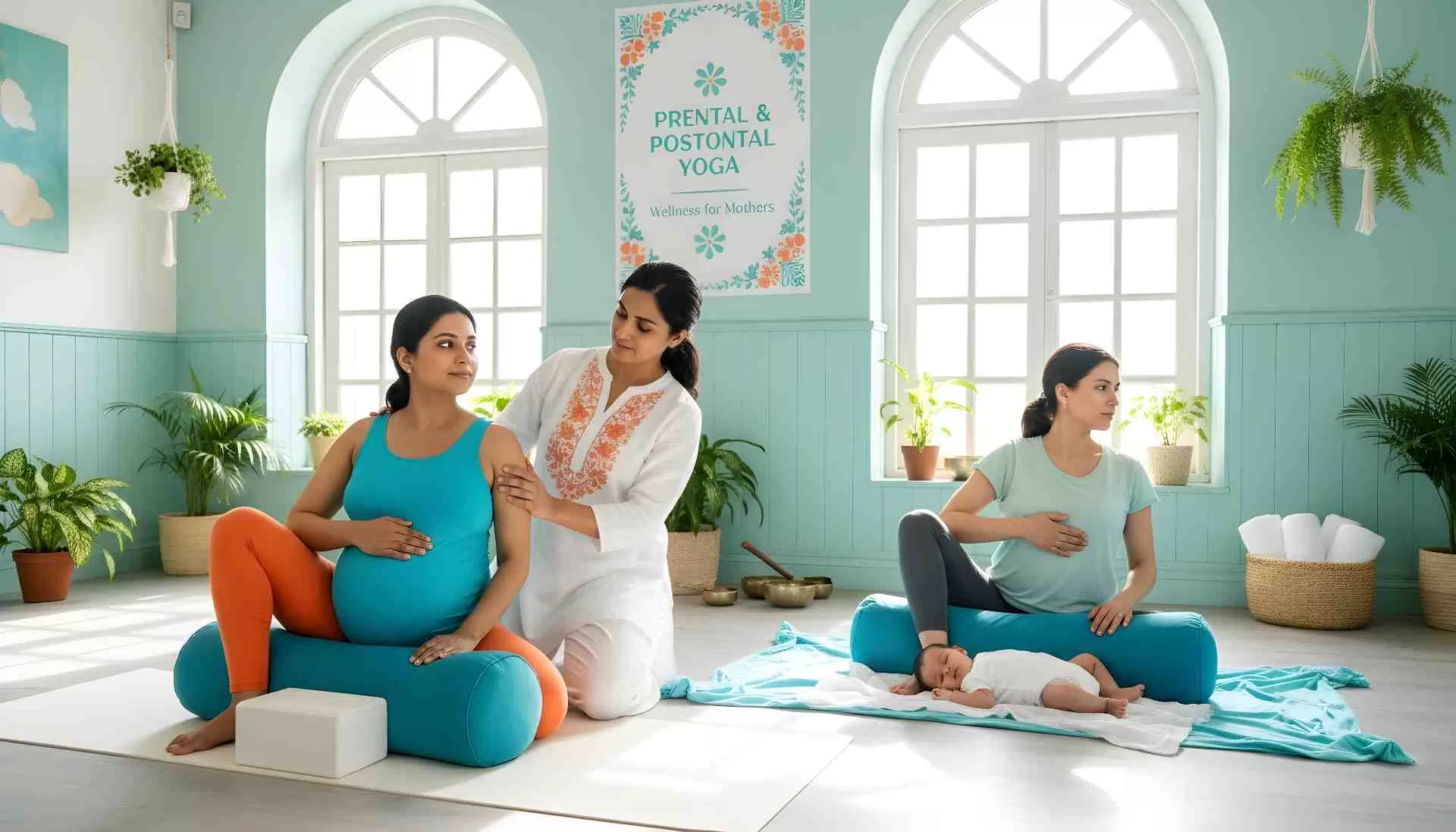
Prenatal & Postnatal Yoga – A Journey of Strength, Calm, and Connection
Your body, mind, and feelings all change a lot during pregnancy. As your hormones and body change, it's essential to stay strong, calm, and linked. During and after pregnancy, yoga can help with that. The goal of these simple but functional exercises is to help women get stronger, more flexible, and mentally stable during and after pregnancy.
Safe, guided exercises and breathing techniques that help with back pain, posture, and getting the body ready for a normal birth are what prenatal yoga is all about during pregnancy. Postnatal yoga, on the other hand, helps moms get their core strength back, tone their abs, and keep their hormones in balance, all of which speed up the healing process and make moms feel better emotionally.
Pregnancy-safe yoga doesn't include deep twists or intense poses like regular yoga does. Instead, it focuses on breathing, relaxing, and being aware of your pelvis. Because of this, pregnant yoga classes are good for women in all three trimesters because they help with comfort, circulation, and getting rid of pregnancy fatigue.
You'll learn the following from this guide:
- What pregnancy and postnatal yoga are and how they can help your physical and mental health as a mother.
- How prenatal yoga is different from regular yoga, with safe poses and breathing techniques that are changed to fit pregnant women.
- Depending on your trimester or stage of healing, here are safe times and ways to do yoga during and after pregnancy.
- Doctors' advice on how to practice yoga safely and effectively during pregnancy and after giving birth.
- Yoga is good for both mom and baby because it increases blood flow, calms the nervous system, and strengthens the bond between them.
If you're searching for prenatal yoga classes near you, look for an experienced instructor who focuses on safe stretches, pelvic floor work, and positions that support birth. We will let you know you are in the right place, as Crystal Fertility provides these consultations for our patients.
What Is Prenatal Yoga?Definition and Purpose:
"Prenatal yoga" is a form of yoga intended only for pregnant women. As the body prepares for birth, it stays strong, flexible, and calm. There aren't many complex or quick moves in yoga for pregnant women. It's more about slow movements, easy stretches, and taking deep breaths.
When a woman is pregnant, her body changes once a week. Prenatal yoga helps these changes happen safely. This helps you breathe better, eases back pain, and keeps your balance. It makes moms feel calm, happy, and most of all, close to their child.
Yoga that is safe for pregnant women shows you how to calm down and breathe, which can help you when you're giving birth. It helps the mother and child stay healthy and calms them down.
Prenatal yoga isn't about doing hard poses; it's about learning to pay attention to your body, move slowly, and care for yourself and your growing baby.
Benefits of Prenatal Yoga
As a woman's body changes during pregnancy, prenatal yoga helps her stay calm, strong, busy, and at ease. It's mostly about deep breathing and gentle moves for mom and baby's health.
Physical Benefits
Here are some of the main physical benefits:
| Benefit |
Why It Matters |
| Reduces back pain |
Eases pressure on the spine and lower back. |
| Improves flexibility |
Prepares muscles and joints for childbirth. |
| Enhances blood circulation |
Increases oxygen flow for mother and baby. |
| Boosts energy |
Reduces tiredness and keeps the body active. |
Prenatal yoga can help improve your strength, balance, and confidence during pregnancy. Making your pelvis more flexible and giving you more control over your body can help a normal birth go more smoothly.
One of the best ways to take care of yourself and your growing baby is to practice prenatal yoga to relieve back pain and improve flexibility. It's a nice way to stay fit and calm.
Emotional and Mental Benefits
Not only is prenatal yoga good for your body, but it can also help calm your mind during a stressful time. Even though you're going through a lot of changes and your hormones are making you crazy, yoga can help you calm down.
- It helps you relax. Simple breathing exercises calm your nervous system and help you sleep better at night.
- It steadies your emotions. Regular yoga during pregnancy can ease mood swings and anxiety when everything feels like too much.
- It connects you with your baby. Those quiet moments on the mat give you time to tune in and bond through gentle movement and breath.
- It makes people less afraid about giving birth . Learning to breathe deeply and stay relaxed builds your confidence for childbirth and helps release tension about the unknown.
Pregnancy is a big deal. Prenatal yoga gives you tools to handle it with a clearer mind and calmer heart.
Yoga during pregnancy can make labor shorter and less painful. It helps moms feel more confident and in control when giving birth.
Prenatal Yoga vs Regular Yoga – Key Differences
Prenatal yoga is designed to help pregnant women, whereas regular yoga is supposed to help people become more flexible and fit. The selection of positions and the amount of effort required of the body are what distinguish them. Because prenatal yoga emphasises safety, comfort, and rest, it is safe and gentle for expectant mothers.
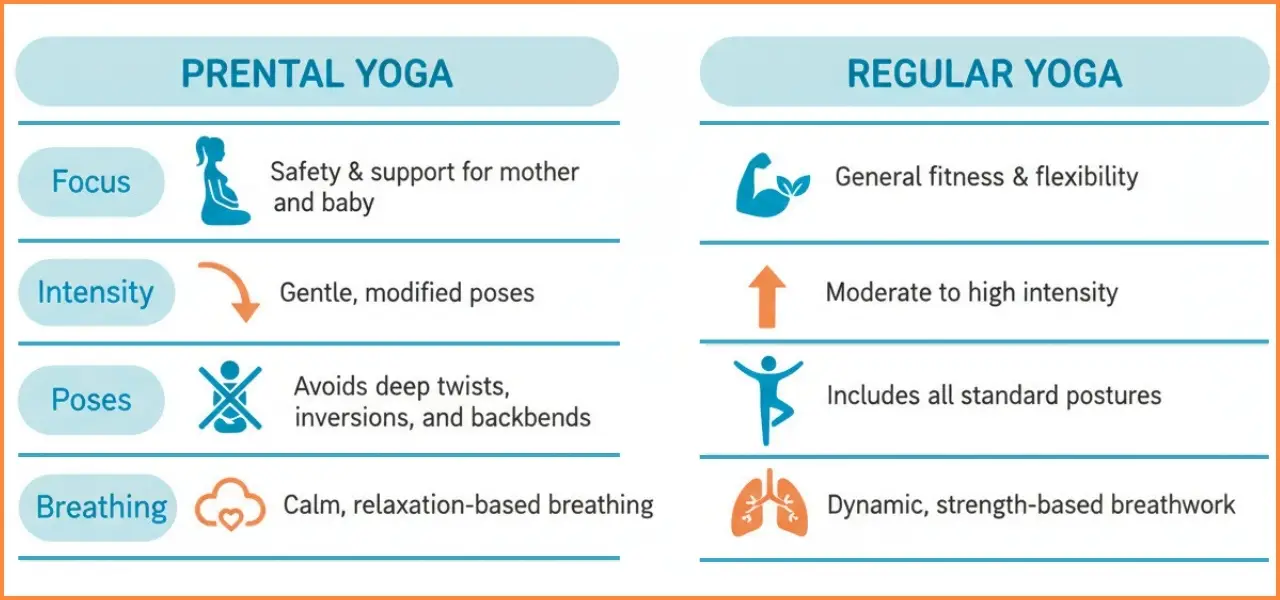
Yoga poses during pregnancy are modified to safeguard the developing baby and prevent the belly from becoming too constricted. That's all. Just relax, take deep breaths, and pay attention to your body. Regular yoga, on the other hand, is more about getting stronger and more flexible, and about lasting longer. When pregnant women practice safe yoga with modified poses, the risks are lower, and both the mother and the baby remain healthy.
Trimester-Wise Yoga Guidance
During each stage of pregnancy, your body and energy levels change in new ways. Because of this, prenatal yoga is changed for each stage to keep you and your baby safe, comfortable, and calm.
First Trimester Yoga Tips (0–12 weeks)
Your body is just starting to get used to being pregnant in the first few weeks. Now is the time to slow down and pay more attention to breathing and staying calm than to moving.
- To lower stress and morning sickness, concentrate on deep breathing and relaxation.
- Don't do positions that put pressure on your stomach or your abdomen.
- Drink plenty of water and take breaks when you need them.
Tadasana (Mountain Pose) and Vrikshasana (Tree Pose) are two gentle yoga positions that are good for the first trimester. They help enhance balance and stability without putting pressure on the tummy.
Second Trimester Yoga Tips (13–27 weeks)
The second trimester usually feels easier. You have more energy and less nausea, so it's a great time to do more yoga.
- Open your hips. Try Butterfly Pose to loosen your pelvis and get ready for delivery.
- Practice squats. Supported squats help prepare your body for a natural birth.
- Focus on breathing. Simple breathing exercises help you stay calm and manage mood swings.
- Join a class. This is the perfect time to find prenatal yoga classes near me that teach safe poses for pregnancy.
Prenatal yoga for the second trimester keeps you flexible, strong, and relaxed as your belly grows.
Third Trimester Yoga Tips (28–40 weeks)
Things should move more slowly as your child grows. Focus on getting ready for birth and easing the pain.
- Be gentle. When you're feeling heavy and tired, meditation and light stretching can help you calm down.
- Help with back pain. Cat-Cow Pose is a great way to ease the stress on your back as your belly grows.
- Change how you sleep. If you lie on your back for too long, the baby may not get enough blood.
- Don't change your pose. There are poses like child's pose and supported bridge pose that can help you stay calm while you are eight months pregnant.
As you get closer to meeting your baby, these last few weeks are a time to stay calm, let go of stress, and trust your body
Warnings & Precautions
Although most women can do prenatal yoga safely, each pregnancy is different. Someone else's solution might not work for you. Before starting any prenatal yoga program, you should always talk to your doctor and get the go-ahead. This is very important if you are worried about or having health issues. If you are looking for prenatal yoga classes near me, make sure that the teachers are trained and know how to teach pregnancy yoga.
This way, they'll know which poses to avoid and how to change the way you move as your body changes. Listen to your body most of all. Stop if something doesn't feel right. If you're pregnant, yoga should make you feel good and help you calm down, not hurt or stress you out. When done safely and with the right help, it allows you and your baby to get through this time.
When to Avoid Prenatal Yoga
Stop yoga and call your doctor right away if you notice:
- Severe nausea or dizziness during or after your practice.
- Vaginal bleeding or fluid leakage at any point in your pregnancy.
- Contractions or pelvic pain before your due date, especially in the later months.
- High blood pressure or placenta previa – these need extra rest and medical care.
If you're asking yourself, "Is prenatal yoga safe for me?" First, talk to your doctor. They know the most about your body and your baby. If pregnant women follow the right steps and are watched, yoga can help them feel better and stay safe.
Postnatal Yoga – Rebuilding Strength After Delivery
What Is Postnatal Yoga?
Postnatal yoga is a gentle way to help your body recover after childbirth. It's not about rushing to lose weight or look a certain way—it's about taking care of yourself. Simple stretches and breathing help your muscles heal, ease tension, and calm your mind when you're exhausted and overwhelmed.
Yoga after delivery also gives you a moment to reconnect with yourself. Between sleepless nights and caring for your baby, it's easy to forget about your own needs. Yoga for postpartum recovery helps ease back pain, brings back your energy, and gives you some emotional relief during those tough early weeks. It's a small thing you can do for yourself that makes a real difference.
Benefits of Postnatal Yoga
Your body needs little movement and attention to get back to normal after giving birth. After giving birth, yoga helps you heal from the inside out by balancing your body, lowering discomfort, and boosting flexibility.
Physical Healing
| Benefit | Focus |
|---|---|
| Strengthens core and pelvic floor | Helps the body recover and regain stability after childbirth. |
| Reduces back and shoulder pain | Relieves tension from feeding, lifting, and carrying the baby. |
| Improves posture | Restores spinal alignment and reduces slouching. |
| Boosts circulation | Supports faster healing and reduces swelling. |
| Increases flexibility | Gently stretches tight muscles and joints. |
After giving birth, postnatal yoga is a safe approach to regain your strength, reduce your discomfort, and promote a smooth recovery for both your body and mind.
Mental and Emotional Recovery
After having a baby, your emotions can be all over the place. You might feel sad, anxious, or just completely drained. Postnatal yoga helps with more than just your body—it calms your mind and lifts your mood.
- Eases postpartum blues. Gentle movement and breathing help reduce sadness, worry, and stress when you're feeling low.
- Bring back your energy. Yoga after delivery helps you feel stronger and more like yourself again, even on hard days.
- It helps you connect with your child. You can connect with your child in a calm and caring way if you take time to breathe and be present.
It's just as important for your emotional health as it is for your physical recovery. When you do yoga to recover after giving birth, you can do both.
Did You Know? Studies have shown that mothers who do postnatal yoga for six weeks have 40% less postpartum worry and better sleep and mood balance than mothers who don't do yoga.
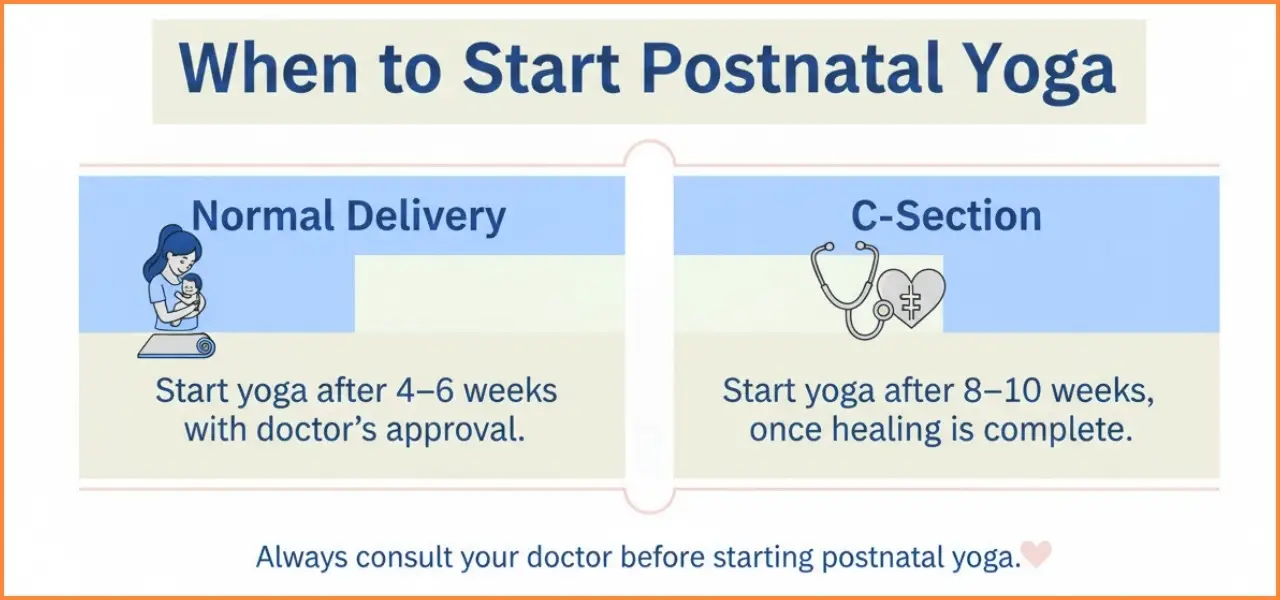
When to Start Postnatal Yoga
Prenatal vs Postnatal Yoga – Comparison Chart
Yoga for moms-to-be, both prenatal and postnatal, is for different reasons at different times of motherhood. During pregnancy, prenatal yoga focuses on supporting your body. After giving birth, postnatal yoga helps you heal and build strength again.
| Feature | Prenatal Yoga | Postnatal Yoga |
|---|---|---|
| Focus | Supporting pregnancy | Recovery and rejuvenation |
| Poses | Gentle, baby-safe | Core-strengthening and restorative |
| Duration | Up to 40 weeks | 6–12 weeks postpartum |
| Benefits | Labor preparation, flexibility | Hormonal balance, emotional health |
Expert Tips for Safe Practice
Top 5 Tips
- First, talk to your doctor. Before you start prenatal or later yoga, make sure you get permission, especially if you had any problems during your pregnancy.
- Find a good teacher. Find trained teachers who know how to work with bodies that are pregnant or have recently given birth.
- Use props to help you out. As your body changes, pillows, blocks, and bolsters can help you stay in poses longer and more comfortably.
- Do not push yourself. Stop right away if something hurts or doesn't feel right. Now is not the time to show anything.
- Take deep breaths and stay in the moment
Instead of rushing through exercises, pay attention to your body and breathe slowly.
Why Choose Our Prenatal & Postnatal Yoga Program
At Crystal Fertility, our prenatal and postnatal yoga programs are created by certified yoga teachers and women’s health experts who truly understand the needs of expecting and new mothers.
We offer a safe, caring space where every woman can strengthen her body, relax her mind, and feel supported throughout her journey of motherhood.
We ensure:
- Doctor-approved yoga routines that are safe and effective.
- Personalised trimester-wise guidance based on your stage of pregnancy.
- Postpartum recovery sessions focused on emotional balance and body healing.
- A calm, holistic environment designed for the comfort of mothers and babies.
Looking for prenatal yoga classes near me or postnatal yoga classes near me? Crystal Fertility offers the best yoga for pregnancy and after giving birth, combining medical safety with careful attention.
Begin Your Journey with Us
Your body deserves gentle care, your mind deserves peace, and your baby deserves a calm beginning. At Crystal Fertility, our prenatal and postnatal yoga sessions are designed to help you feel supported, balanced, and confident at every stage of motherhood.
Book your Prenatal & Postnatal Yoga Session today and experience holistic wellness — one breath, one movement, one peaceful moment at a time.
Legal & Safety Disclaimer
Note: Always consult your healthcare provider before starting any prenatal or postnatal yoga practice. Classes are designed for educational and wellness support, not a substitute for medical treatment.
FAQ (Frequently Asked Questions):
Helpful Resources
Contact Us: Schedule Your First Free Consultation with Crystal Fertility
Post: Egg Donation
Doctor Profile: Meet Dr Nidhi Sharma
Google Maps: Find Us on Google Map